Momentum Building for Thermal Energy Networks in Montgomery County
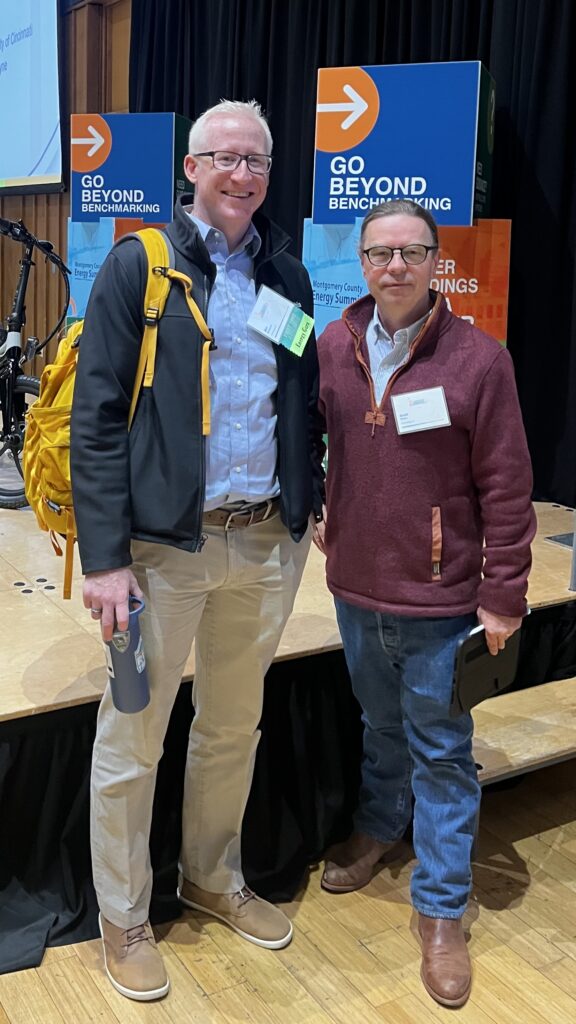
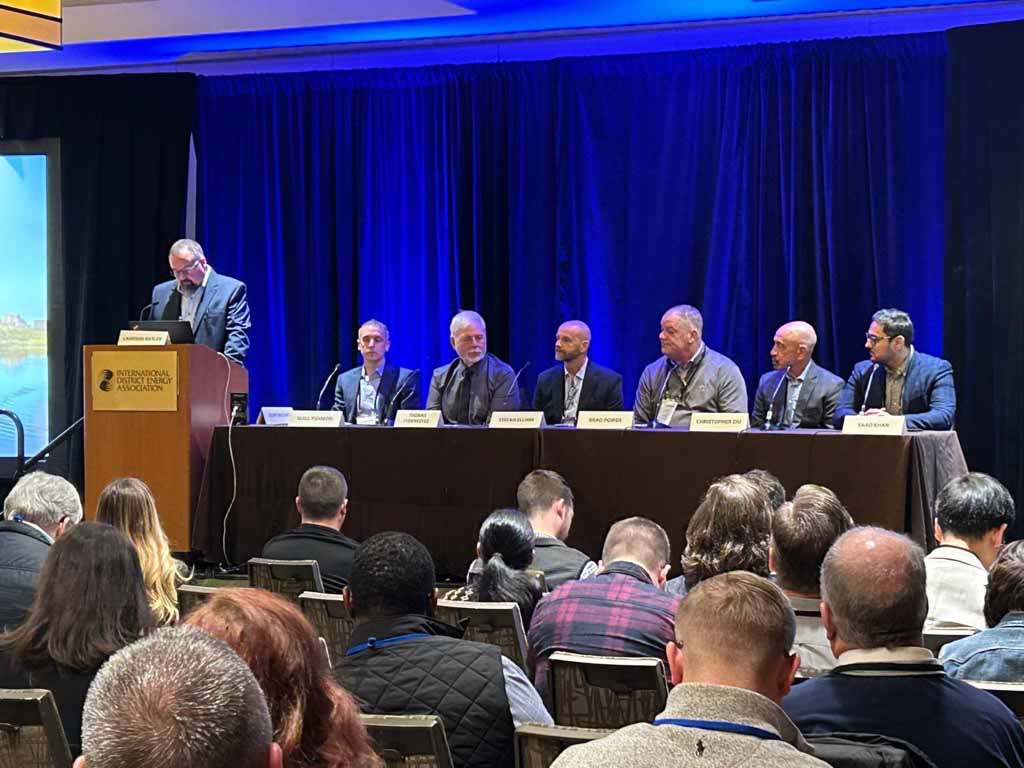
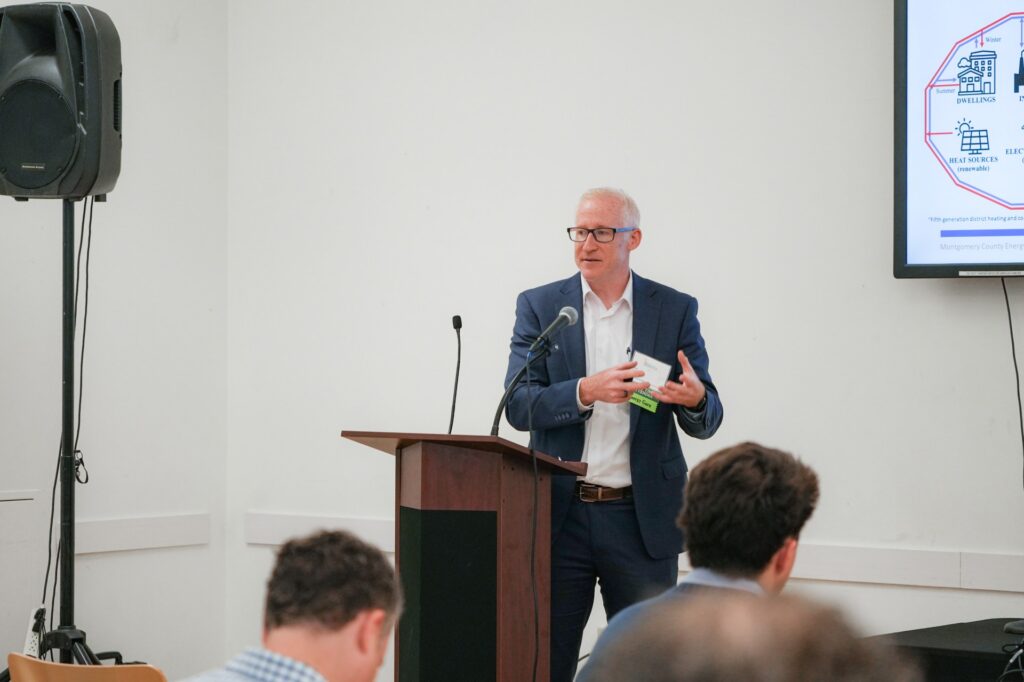
FVB Energy sponsored and participated in the Montgomery County Energy Summit, held 28–29 April 2026 in Silver Spring, Maryland. During the event, Scott Emery and Ben Burgoyne presented “Unlocking Decarbonization and Resiliency through Thermal Energy Networks.”
The session attracted a near-capacity audience. Attendees asked thoughtful questions and shared practical insights. As a result, the discussion highlighted a clear shift from awareness to implementation. Increasingly, stakeholders want to understand how thermal energy networks can help meet ambitious climate goals.
Building Energy Performance Standards Accelerate Action
Policy continues to drive momentum in Montgomery County. The County has set an ambitious goal of achieving zero greenhouse gas emissions by 2035. To support that goal, it established a robust Building Energy Performance Standards (BEPS) framework. BEPS requires most buildings larger than 25,000 square feet to benchmark energy use annually and meet defined performance standards over time. As a result, building owners have a clear pathway to reduce emissions and improve building performance.
Montgomery County’s Building Energy Performance Standards (BEPS) program continues to shape energy planning and decarbonization efforts across the County.
At the Summit, attendees highlighted the growing impact of BEPS. Building owners discussed retrofit strategies, electrification pathways, and long-term capital planning. In addition, many participants viewed BEPS as more than a reporting requirement. Instead, they saw it as a catalyst for action. Consequently, organizations across the County continue to evaluate new ways to reduce emissions and improve energy performance.
Maryland’s broader climate policies add further momentum. The state’s Building Energy Performance Standards require large buildings to progressively reduce direct emissions and achieve net-zero direct greenhouse gas emissions by 2040. As a result, many organizations are evaluating alternatives to on-site fossil fuel combustion. Furthermore, these requirements encourage long-term planning and support the transition to lower-carbon energy solutions.
Thermal Energy Networks Offer a Scalable Path to Decarbonization
At the same time, large campuses and multifamily developments in the County are beginning to explore how to meet these requirements in practice. For these types of properties, building-by-building electrification may not always be the most efficient pathway. District energy systems and ambient thermal energy networks offer an alternative approach, enabling clusters of buildings to share thermal resources, improve efficiency, and support coordinated decarbonization at scale.
In parallel, Maryland’s WARMTH Act is intended to advance the development of thermal energy network pilots, including a potential project in Montgomery County that was highlighted during the opening day keynote by Maryland Delegate Lorig Charkoudian, the Act’s sponsor.
One of the clearest takeaways from the event was the level of commitment and engagement across stakeholders. Policymakers, utilities, property owners, and solution providers are actively working through implementation challenges and aligning around practical next steps.
Montgomery County Emerges as a Leader in Thermal Energy Networks
Montgomery County is emerging as a leading example of how strong policy signals can accelerate the deployment of scalable solutions. As jurisdictions work toward similar goals, thermal energy networks are well-positioned to play a key role in delivering equitable, resilient, and cost-effective decarbonization at scale.