Exploring District Energy and Decarbonization at a Young Leaders in Infrastructure Ottawa Event
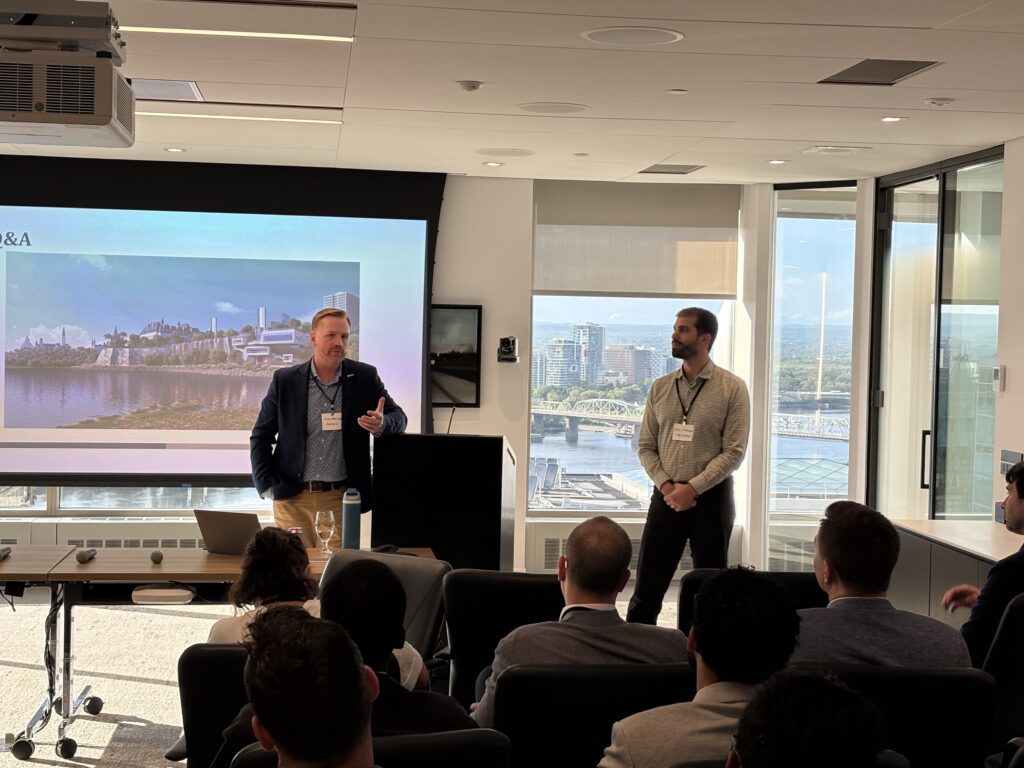
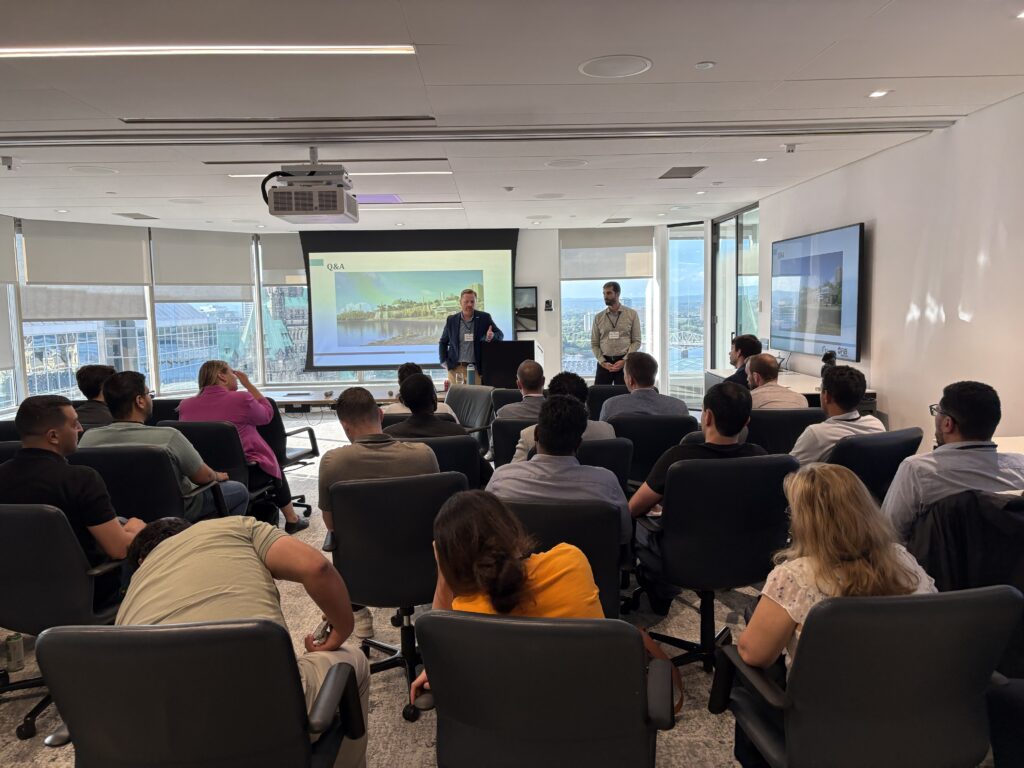
In August, FVB’s Emil Haddad, P.Eng., joined Sean Russell of Equans at a Young Leaders in Infrastructure Ottawa event focused on district energy and the Energy Services Acquisition Program. The event brought together approximately 35 to 40 professionals from Ottawa’s infrastructure, energy, and sustainability sectors.
Throughout the evening, attendees explored thermal energy technologies from around the world. They also learned about the Energy Services Acquisition Program and its role in modernizing the centralized heating and cooling network that serves federal buildings across Canada’s National Capital Region.
Advancing District Energy and Sustainable Infrastructure
As communities work toward ambitious climate goals, thermal energy systems continue to play an important role in reducing emissions and improving energy resilience.
During the presentation, Emil and Sean shared insights into the scale and complexity of renewing the National Capital Region’s energy network. They also highlighted the long-term planning, collaboration, and investment required to deliver large infrastructure projects successfully.
In addition, the discussion explored how existing energy networks can evolve over time through modernization, innovation, and strategic system upgrades.

Future Opportunities for Decarbonization
Looking ahead, Emil and Sean explored several opportunities to further reduce greenhouse gas emissions across large-scale energy networks. The discussion focused on sewer heat recovery, nuclear combined heat and power, and the potential use of the Ottawa River as a cooling source.
These approaches highlight how communities can use local energy resources to improve efficiency, strengthen resilience, and support long-term decarbonization goals.
The presentation also sparked thoughtful discussion among attendees. Participants asked questions about the delivery of the Energy Services Acquisition Program, the public-private partnership model, long-term operations, and the factors that have helped keep the project on track.
Events like this encourage knowledge sharing across the industry and help connect the next generation of infrastructure leaders. Thank you to Young Leaders in Infrastructure Ottawa for hosting this engaging event and bringing together professionals to share insights on decarbonization, thermal energy systems, and the future of energy infrastructure.
Are you a young leader in the infrastructure sector? Learn more about Young Leaders in Infrastructure and discover opportunities to connect, learn, and get involved across Canada.