District Energy Highlights from FVB Energy Inc. at IDEA 2026
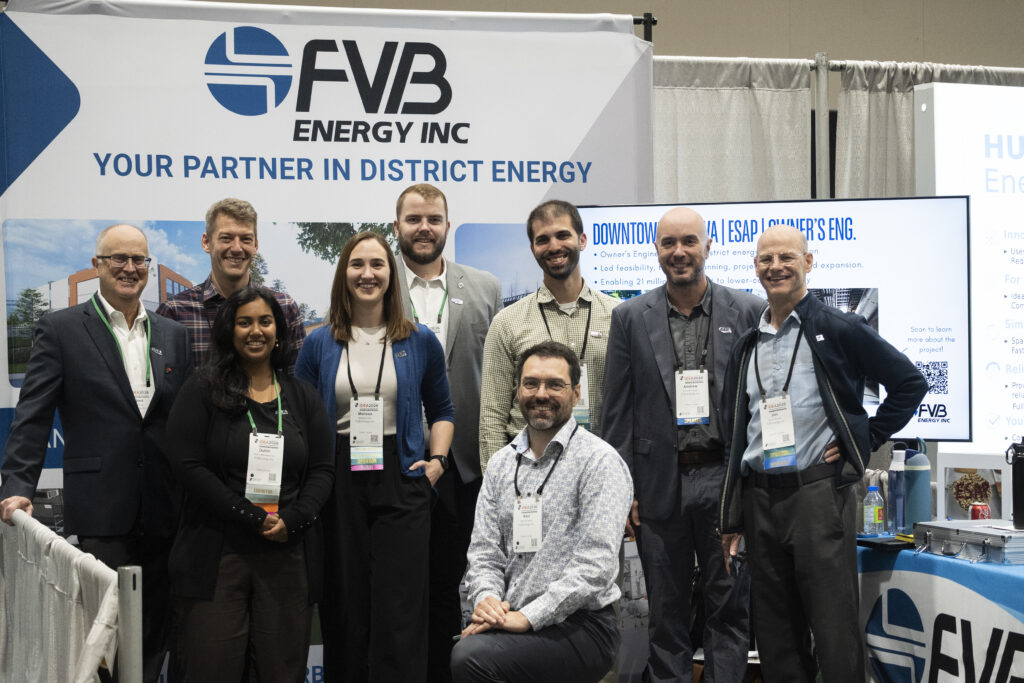
FVB was proud to participate as a Silver Sponsor at the International District Energy Association (IDEA) Annual Conference in Ottawa. As one of the leading events for professionals working in district energy, district heating, district cooling, and sustainable energy infrastructure, IDEA brings together industry leaders from across North America and beyond.
Our Experts Took the Stage
Our experts contributed to the conference programme through technical presentations and project case studies that highlighted real-world applications of district energy, energy system modernization, district cooling, and low-carbon energy solutions.
Harnessing AI Data Centre Waste Heat for Low Carbon District Energy Systems
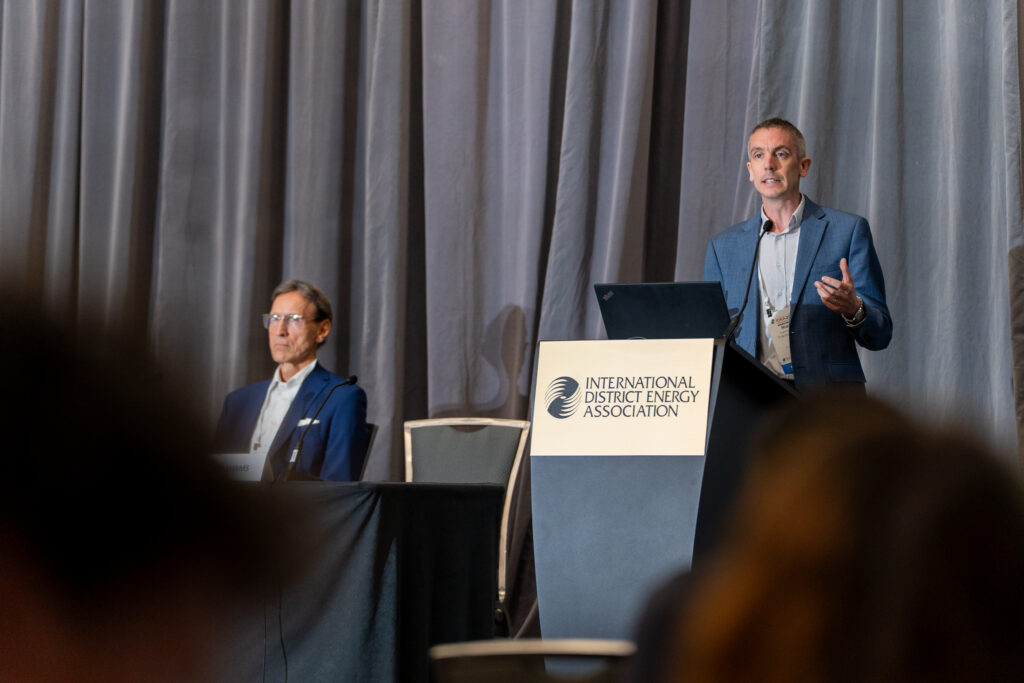
Niall Pidgeon, Senior Manager at FVB Energy INC., and Mark Kindachuk, President of Intermarket Properties, presented Harnessing AI Data Centre Waste Heat for Low Carbon District Energy Systems. Their presentation explored how waste heat from AI data centres could support the development of low-carbon district energy systems. It highlighted a feasibility study underway in the Region of Waterloo. The session also examined how proven waste heat recovery approaches can support more sustainable energy infrastructure as demand for artificial intelligence computing continues to grow.
Later in the conference, Niall also participated in the panel discussion Making It Happen: Turning Data Center Energy Opportunities into Operating Projects. Joining Ashley Dirou, Senior Global Sales Developer, Data Centers, at Grundfos; Peter Ronson, Chief Operating Officer at Markham District Energy; Ahmad Shams, Director of Business Development at CenTrio; Samson Tam, Vice President, Development, at Corix; and Liam Walsh, Senior Engineer at Thornton Tomasetti, the panel shared lessons learned from real-world projects.
In particular, the discussion focused on the challenges that nearly prevented projects from moving forward. The panellists also explored the factors that helped make projects successful, including policy, funding, partnerships, and timing. In addition, they discussed risk ownership and the importance of stakeholder collaboration. Finally, the panel considered what approaches could be standardized to support future developments.

Niall Pidgeon is Senior Manager, Strategic Development & Projects at FVB. He specializes in low-carbon district energy systems and leads the planning and delivery of complex energy projects across Canada and the United States.
Interested in learning more? Contact Niall by email below.
Using Waste-to-Energy in Burnaby’s Low Carbon DES
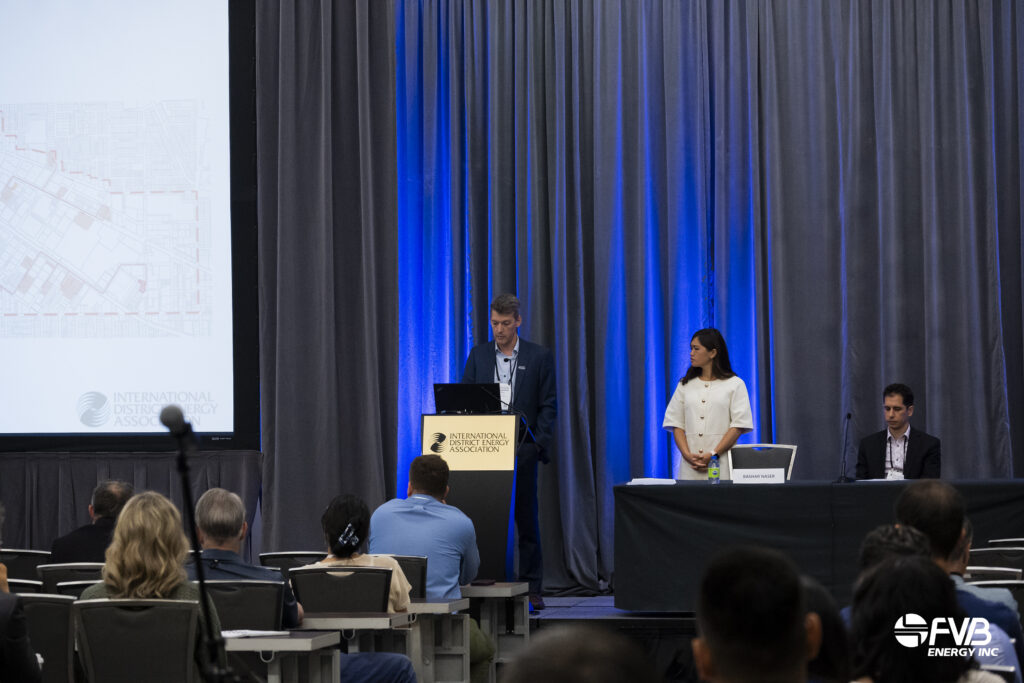
Next, Bryn Elliott, Engineering Manager at FVB Energy Inc., and Janelle Frank, Senior Manager, Civic Projects, presented Using Waste-to-Energy in Burnaby’s Low Carbon DES. Their presentation highlighted the City of Burnaby’s new district energy utility. Specifically, the system will use waste heat from Metro Vancouver’s Waste-to-Energy Facility. It will provide low-carbon energy to the Metrotown and Edmonds communities.
In addition, the session explored system planning, phased development, and the role of district energy in reducing emissions while supporting future growth. The project is expected to be developed in phases, with initial customers connected beginning in 2028. Once complete, the system has the potential to support significant growth while helping customers meet ambitious decarbonization targets.
More information about the project is available on the City of Burnaby’s website.
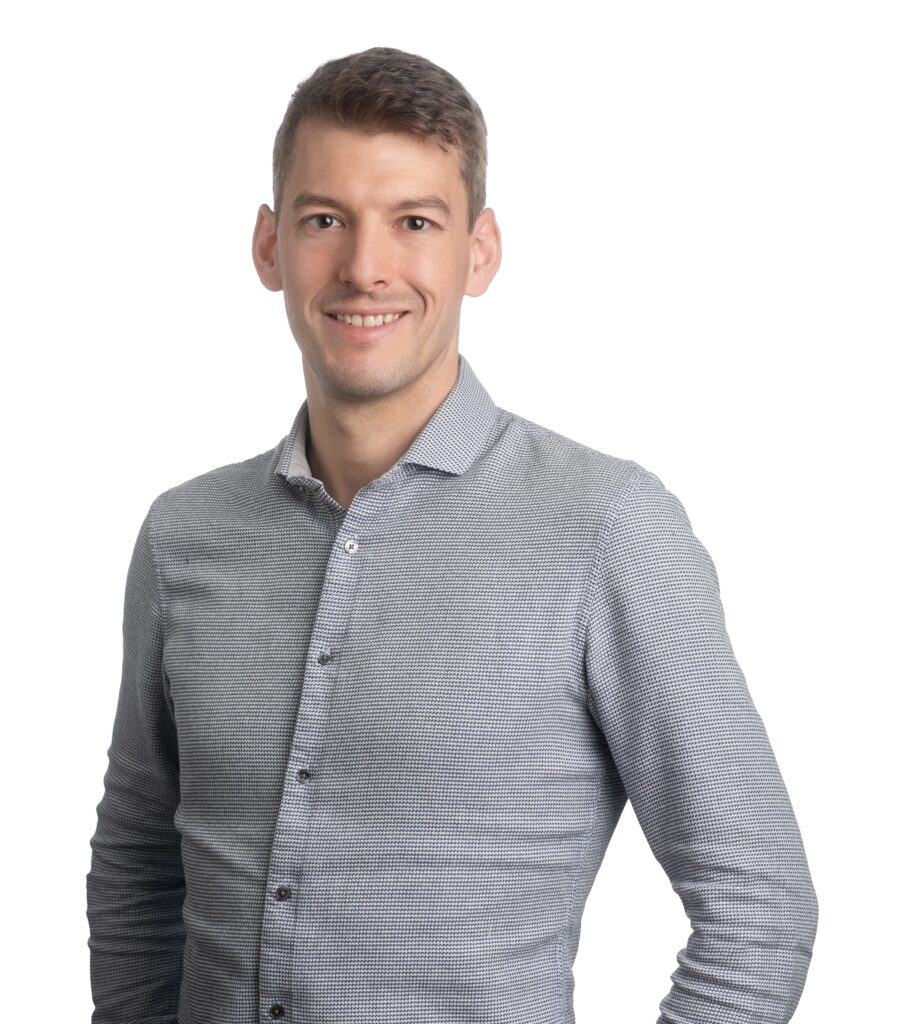
Bryn Elliott is the Engineering Manager at FVB’s Vancouver office. With more than 14 years of experience, he specializes in thermal energy systems, low-carbon energy solutions, and the design of heating and cooling infrastructure. His work includes feasibility studies, energy transfer stations, energy centres, and large-scale steam-to-hot-water conversion projects
Interested in learning more? Contact Bryn by email or connect with him on LinkedIn below.
Early Results of Steam to Hot Water Peak Heating Demand Reductions for ESAP Buildings in Ottawa
In a separate session, Andrew Young, Engineering Manager at FVB Energy Inc., and Sean Russell from EQUANS presented Early Results of Steam-to-Hot-Water Peak Heating Demand Reductions for ESAP Buildings in Ottawa. Early results showed measurable reductions in peak heating demand across a range of building types, including offices, laboratories, cultural facilities, and public spaces. The presentation offered an early look at the benefits of the ESAP modernization programme and the transition to low-temperature hot water systems. In addition, the session highlighted how improved system control and reduced distribution losses can support more efficient district energy infrastructure planning in the future.
Learn more about the project here.
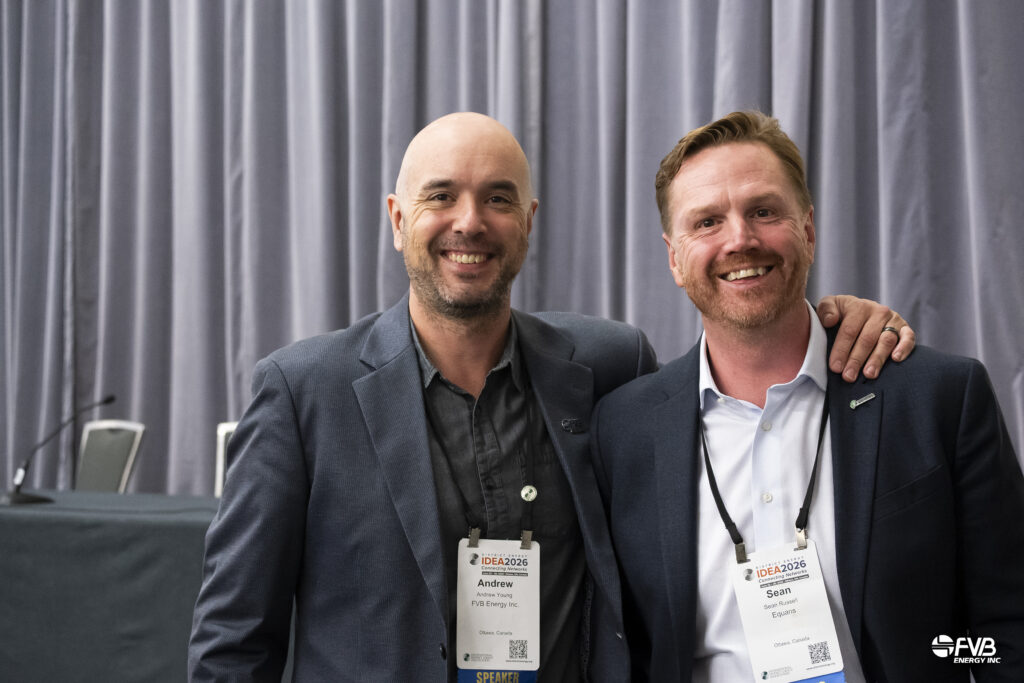

Andrew Young is the Engineering Manager at FVB’s Ottawa office. He has more than 19 years of experience delivering energy infrastructure projects across Canada, with expertise in district heating and cooling, steam-to-hot-water conversions, energy transfer stations, and building performance improvements.
Interested in learning more? Contact Andrew by email or connect with him on LinkedIn below.
Why P3? Understanding the Rationale behind ESAP’s Delivery Model
In another session, Jim Manson, Principal at FVB Energy Inc., presented Why P3? Understanding the Rationale behind ESAP’s Delivery Model alongside Tomasz Smetny-Sowa, Senior Program Director, Energy Services Acquisition Program (ESAP), and Miguel Izquierdo Martin, Director General, High Speed Rail, Transport (former ESAP).
First, the presentation examined why PSPC chose to modernize the National Capital Region district energy system and deliver the project through a Public-Private Partnership (P3) model. It also provided an overview of the system’s history, from its origins in 1915 to its current role serving approximately 88 buildings.
Next, the session explored the rationale behind the P3 approach, including potential cost savings, opportunities for innovation, and risk allocation. In addition, it highlighted how project goals, performance requirements, and procurement strategies were established before procurement began.
The presentation also discussed how PSPC structured the bid process to encourage innovation while maintaining clear project outcomes. Finally, it examined how procurement, risk management, and collaboration helped lay the foundation for successful design and construction.
Learn more about the project here.
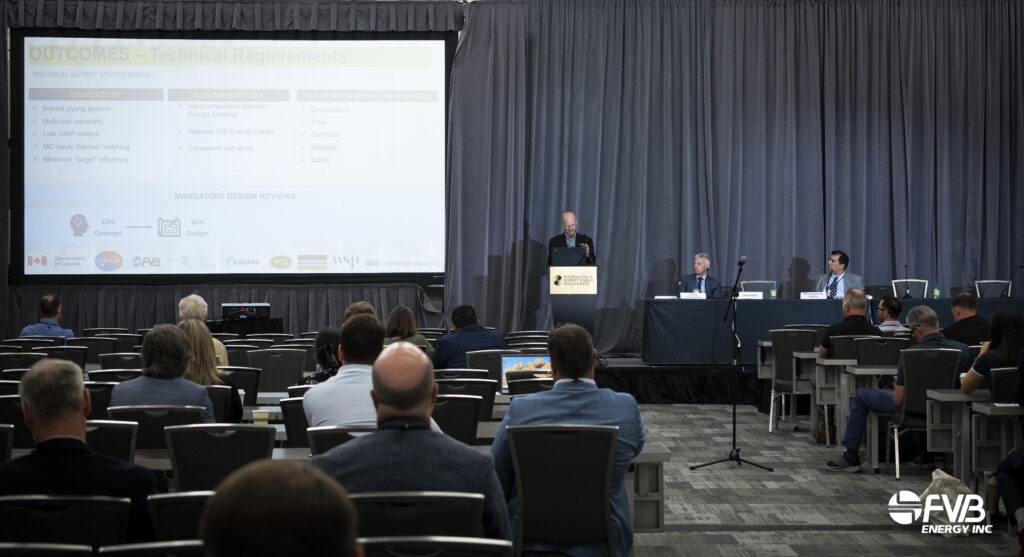
Photo courtesy of FVB Energy Inc.

Jim Manson is a Senior Mechanical Engineer with over 30 years of experience in district energy, CHP, and low-carbon energy systems. He recently served as FVB’s Principal for the Federal Government’s ESAP project, modernizing the National Capital Region’s district energy system. Jim has also helped communities across BC and Alberta develop district energy systems, supporting projects from feasibility and financial analysis through design, implementation, and operations.
Interested in learning more? Contact Jim by email or connect with him on LinkedIn below.
District Energy as an Electricity System Resource
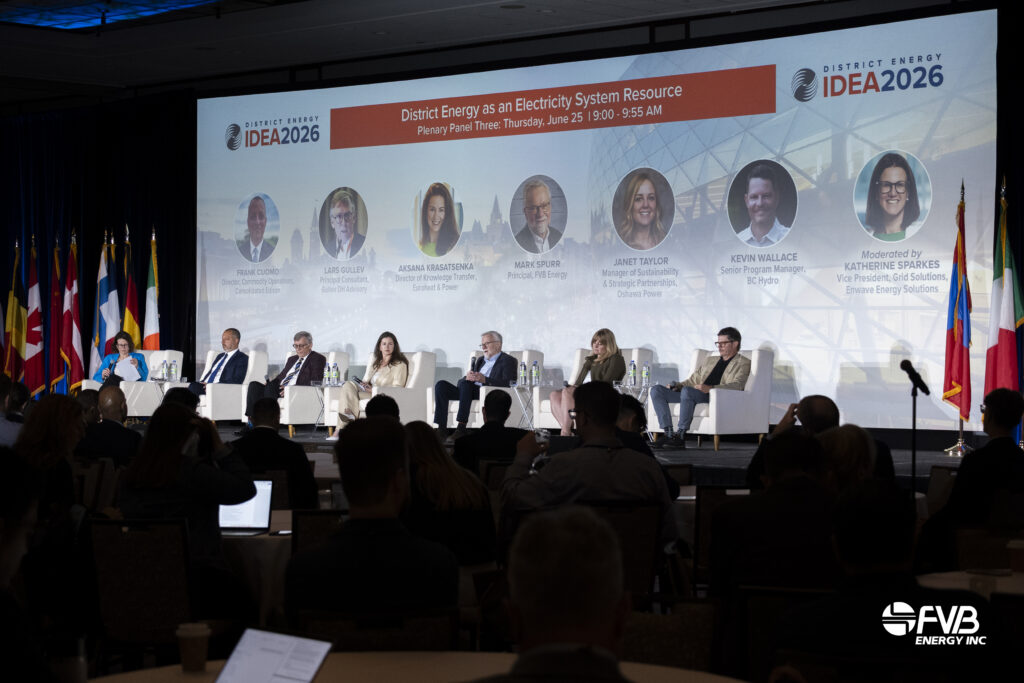
Mark Spurr, Principal at FVB Energy Inc., participated in the plenary panel discussion District Energy as an Electricity System Resource. He joined Frank A. Cuomo, Director at Con Edison; Lars Gullev, CEO of Gullev DH Advisory; Aksana Krasatsenka, Director of Knowledge Transfer & DHC+ at Euroheat & Power; Janet Taylor, Manager of Sustainability & Strategic Partnerships at Oshawa Power; and Kevin Wallace, Senior Program Manager at BC Hydro.
The panel explored growing pressure on electricity grids and the role district energy can play in addressing those challenges.
Electricity demand continues to rise. AI data centres and building electrification are driving much of this growth. As a result, utilities face increasing pressure to expand generation, transmission, and distribution infrastructure.
The panel highlighted how district energy systems can reduce peak electricity demand, improve grid resilience, and defer costly infrastructure upgrades. In addition, district energy can support building decarbonisation while requiring less peak electrical capacity than standalone systems. Thermal energy storage and efficient heat pump operation further reduce demand on the grid.
Mark introduced Sector-Coupled Integrated Resource Planning (SCIRP), an approach that integrates electricity, natural gas, and thermal energy planning. He encouraged continued progress toward integrated utility planning in Canada and highlighted opportunities to advance similar approaches in the United States.
District Technical and Financial Feasibility of a Large-Scale Wastewater Thermal Energy Recovery System for the Decarbonization of Downtown Denver as an Electricity System Resource
Mark also presented Technical and Financial Feasibility of a Large-Scale Wastewater Thermal Energy Recovery System for the Decarbonization of Downtown Denver alongside Blair Wisdom, Energy Manager at Metro Water Recovery, and Simon Olivieri, Project Manager at Ramboll.
The presentation explored how wastewater thermal energy recovery could support two objectives. First, it could help reduce wintertime effluent temperatures to meet water quality regulations. Second, it could provide renewable thermal energy to downtown Denver, Ball Arena, River Mile, and future developments located approximately six miles from the Robert W. Hite Treatment Facility.
The study found that available wintertime heat supply significantly exceeds projected heating demand. As a result, wastewater represents a promising renewable energy source for future growth.
The team evaluated multiple delivery systems, including ambient loop, hot water, chilled water, and steam configurations. Preliminary results identified a two-pipe hot water system as the most cost-effective option.
Moving forward, the project team will confirm the preferred delivery approach, finalize transmission routes, engage stakeholders, and develop a business and financing model for implementation.
The Road Ahead for TENs
Mark also presented at the Thermal Energy Networks Workshop, where he addressed The Road Ahead for TENs.
His presentation highlighted lessons learned from pilot projects and explored ways to improve project economics. In particular, Mark emphasized the value of hybrid systems that combine thermal energy networks with natural gas for peaking and backup. He noted that this approach can achieve significant carbon reductions while improving affordability and increasing the likelihood of project implementation.
In addition, the presentation examined the role of regulation and the benefits of integrating electricity, natural gas, and thermal energy planning.
Can Policy Actually Drive Data Center Heat Reuse?
Finally, Mark joined industry leaders for the panel discussion Can Policy Actually Drive Data Center Heat Reuse? during the District Energy & Data Centers Workshop.
The discussion focused on policy challenges and opportunities related to data centre development and waste heat recovery. Mark outlined several state and local policy options that could encourage data centre heat reuse while supporting broader decarbonization goals and more efficient energy infrastructure planning.
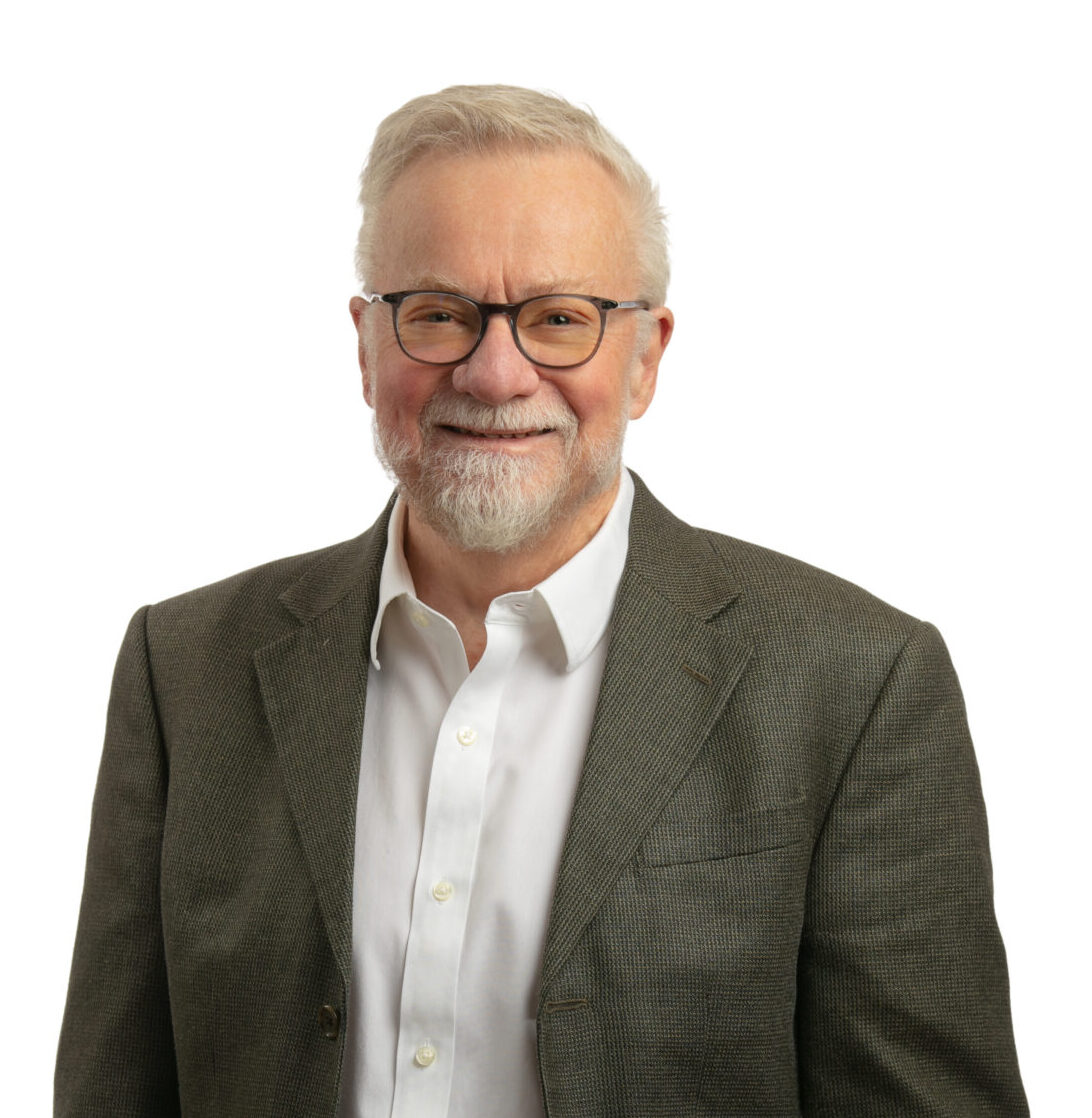
Mark Spurr is Principal at FVB Energy Inc. and has been a district energy consultant for more than 40 years. He advises utilities, cities, and universities on system design, energy infrastructure master planning, decarbonization, economic analysis, rate design anddue diligence review for asset acquisitions or sales. His current work is heavily focused on new district energy system design and decarbonization of existing systems. In addition, since 1990, he has served as Legislative Director for the International District Energy Association (IDEA), where he helps advance policies that support the growth of district energy systems
Interested in learning more? Contact Mark by email or connect with him on LinkedIn below.
District Cooling Development in Varberg, Sweden
Representing FVB Sweden, Bernt presented District Cooling Development in Varberg, Sweden. The presentation highlighted a state-of-the-art district cooling system that uses seawater from the North Sea as its primary cooling source. As a result, the system reduces reliance on traditional energy-intensive cooling methods. In addition, thermal energy storage allows chilled water to be produced during off-peak hours and distributed efficiently throughout the network as needed. The project demonstrates how innovative cooling solutions can improve energy efficiency while supporting sustainable community growth.
Learn more about the project here.
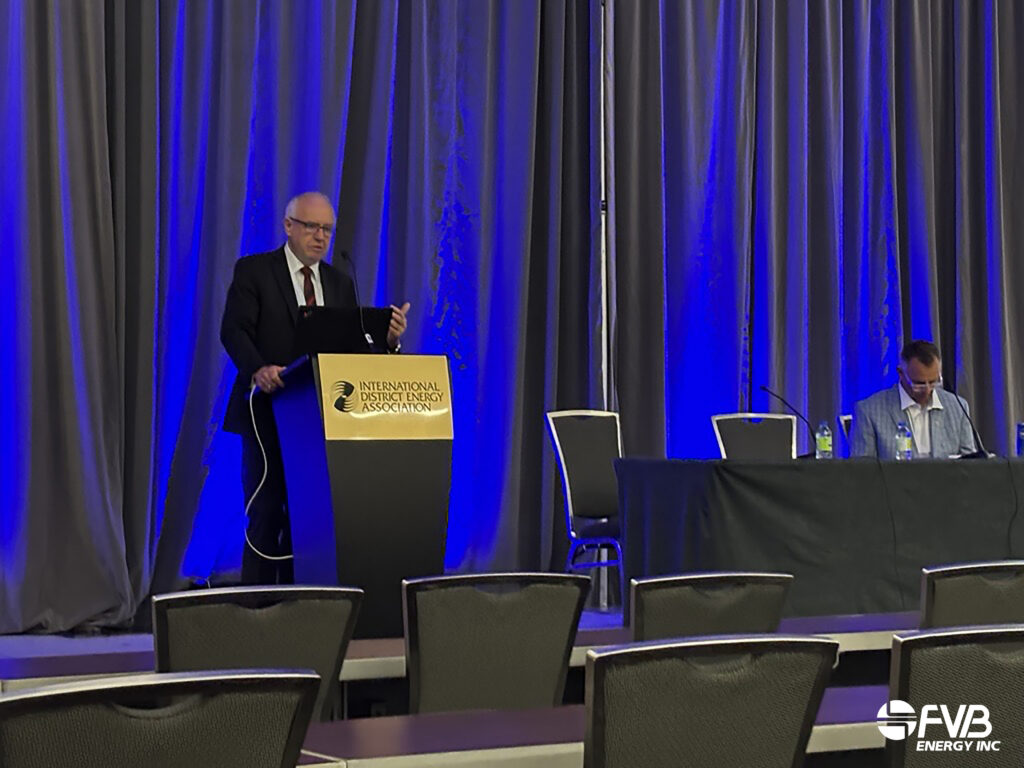
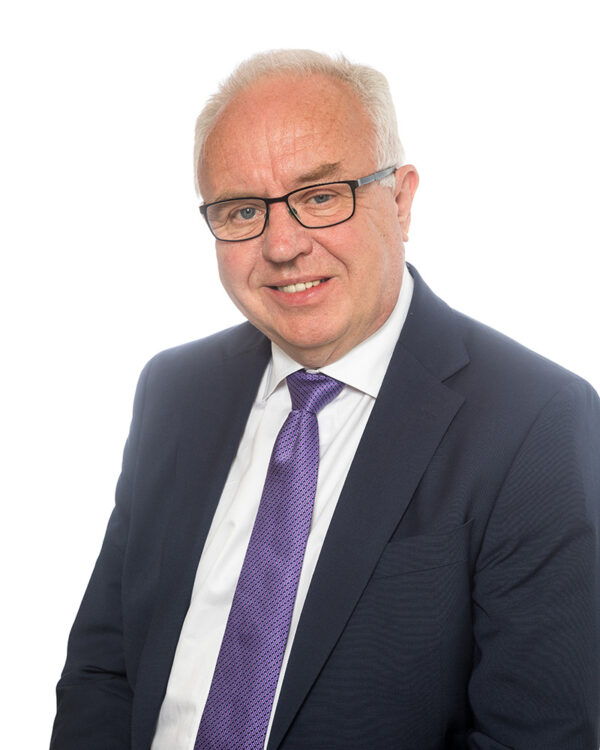
Bernt Andersson is Senior Advisor at FVB Sweden and has more than 40 years of experience in the district energy industry. Throughout his career, he has worked across North America, Europe, the Middle East, and Asia. In addition, he played a key role in expanding FVB’s international presence. His expertise spans district heating, district cooling, combined heat and power, and sustainable energy systems.
Interested in learning more? Connect with Bernt on LinkedIn below.