




Client: Cornwall Electric (Currently Owned by Fortis)
Year: 1994
Project Highlights
- Converted two existing hospitals and one school from steam heating to central hot water heating.
- Designed, constructed, and operational within one calendar year.
North America’s First Hot Water District Heating System with Natural Gas Combined Heat and Power
The medium temperature (120°C) hot water District Heating system began operation in 1994. Cornwall was North America’s first District Energy system to combine the use of hot water for heating and combined heat and power. The initial system provided all the heating and domestic hot water needs for two hospitals as well as 13 additional municipal and private sector customers totaling 140,000 m².
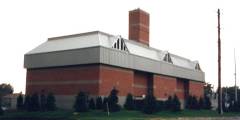
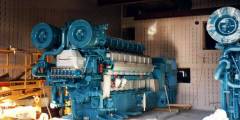
The energy centre is uniquely located in a residential neighborhood and is less than 15 metres from the nearest home. This sensitive location required a unique building design to blend in with the residential location and address the noise created by reciprocating engines. The energy centre contains three (3) natural gas fired hot water boilers (total output capacity = 10.5 MWt) plus two 2.5 MWe gas fired combined heat and power engines (thermal output = 4.8 MWt) and was designed to operate as an uncrewed facility.
The energy centre was designed to operate as an island during an electrical grid interruption and provide electricity and heat to critical buildings in the Cornwall area. During the 1998 Montreal Ice Storm, Cornwall was able to keep buildings warm and route electricity to critical buildings like hospitals and emergency shelters because of their District Energy system.
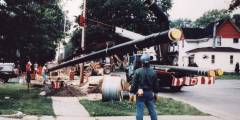
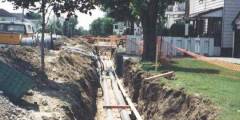
The hot water system contains approximately 5,000 trench metres of European Standard (EN 253) pre-insulated thin-walled steel pipe.
The two largest customers are hospitals who each had their own central steam plant. The project required converting the hospitals plus one school heating systems from steam to hot water.
FVB’s involvement started with the initial feasibility study in 1993. This was followed up with business case development, conceptual design, marketing assistance, detail design (energy centre, distribution piping & customer connections), construction support (1994), and ongoing operational support.
Keywords
STHW Conversion, Combined Heat & Power, Hospital, DPS, ETS, Energy Centre